
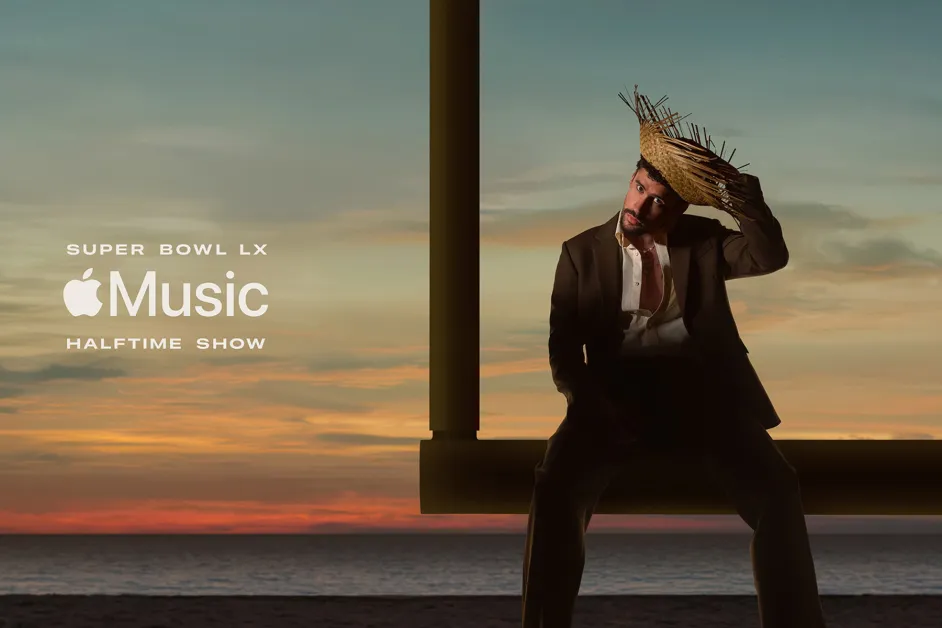
Amidst the NFL’s decision to feature Bad Bunny as the main act for Super Bowl LX, they have received mixed reactions and faced major backlash from audiences. Bad Bunny is not only the number one Latin artist of the twenty-first century, but also the first artist to ever hit number one on the Billboard 200 chart for an all-Spanish album, a Grammy Award winner, and has accumulated over 100 billion streams on Spotify. His extensive resume made his selection relevant and justified. In the current political climate, which has led to major deportations, it seems intentional, highlighting Bad Bunny’s clear distaste for the current administration. However, many people have spoken out against him, stating that his values should not be propped on a stage as big as the Super Bowl and go to someone who embodies “American” values. His selection reflects the NFL’s push for global recognition, the impact and importance of cultural diversity, and the division within this country politically.
The Super Bowl attracted 127.7 million viewers last year, around a third of the current U.S. population, and it is regarded as one of the most anticipated events for American football fans. Unlike the World Cup or the Olympics, which enjoy worldwide recognition, American football has failed to obtain the same level of global interest. In an effort to broaden their audience, the NFL has scheduled games in Berlin, Dublin, São Paolo, and Madrid, spanning across many countries and drawing in global fans. Money is the biggest driving force behind professional sports, and in order for the NFL to have future success, a new demographic has to be introduced. Exposure is everything, and Bad Bunny’s popularity across not only Hispanic and Latino communities but also the younger generation unlocks avenues in revenue. His hit songs “MONACO,” “DtMF,” and “Ojitos Lindos” have trended across social media platforms and the charts, establishing his range across cultural landscapes. Taking inspiration from other sports, such as America’s pastime baseball, which has lots of Latin influence, taking advantage of icons across multiple communities is an opportunity that the NFL would be ignorant to pass up on in the cut-throat environment of sports and entertainment.
The “American” identity is not confined to one singular stereotypical group; the biggest criticism that the public has had stems from the fact that Bad Bunny speaks Spanish and that his songs do not glorify American values that some consider Christian and clean. Additionally, this year, Bad Bunny has cancelled his tour dates through the U.S. in fear of his fans being detained and wrongly prosecuted by ICE. Nevertheless, how an artist represents themself does not make them any less American. Bad Bunny is from Puerto Rico, a U.S. territory, and his choice to affiliate with any ideals is an American right, guaranteed in the First Amendment.
When Shakira and JLO, two Latina women, performed together at Super Bowl LIV, there was no opposition, and Bad Bunny performed at that show alongside them, not to mention that Shakira also performs in Spanish. What makes America beautiful is the fact that it is a “melting pot.” In every state, you can find rich cultures from all over the world; whether from their ancestors who sacrificed or from an immigrant who recently came to America, they all aspire to live the American Dream. For the several Americans who relate to and enjoy the music that Bad Bunny performs, the Super Bowl should be an outlet for them and a chance to see someone who represents inclusion and a vibrant culture that should be shared. Differences should be embraced, not rejected.
Perhaps the most critical of this decision has been the President, who expressed his strong feelings about the event and a group that he has uplifted and praised for their work in reviving young Christian conservatives, Turning Point USA. Founded in 2012, the organization rose to national prominence and recognition over a few short years, and today stands as a symbol of power within conservative communities. Turning Point has established an “All-American” halftime show, focusing on the core values of freedom and Christianity, providing a rival show to the NFL, and allowing their audience to find an option that is catered to them. This alternative show is a great idea, but it is flawed, particularly in how it targets Bad Bunny and personifies him as un-American. It creates a stigma around people who are not conservatives, but his music is American; it is a love story, it uses lyrics to express joy and heartbreak, and attacks the injustices that his own country faces. This halftime show promotes hateful actions, which are not representative of a group based in Christianity and focused on spreading Jesus’ love to all, because his love is not exclusive to conservative Americans. Moreover, Spanish is the second most spoken language in the U.S., which means millions of Americans will be able to understand his show. There is nothing cruel about listening to another language for ten minutes. What happens if next year a country artist that the public wants to see is chosen? Will there be a second show then? Regardless, the NFL has defended its decision, and Bad Bunny will be performing in 2026. Ultimately, everyone has their own personal choice to tune into whatever halftime show they desire.
The best part of free will is that people can use it however they want. If viewers do not want to listen to his show, they can mute the TV, tune in to Turning Point USA, or watch the puppy bowl and adopt a fur baby. It was not until the early nineties that the Super Bowl was revamped. Before the major shift, marching bands and small acts held the stage, not pop stars, and there were no viewers. At the end of the day, multiculturalism is not going to damage an identity as an American, because it is a fundamental aspect of every living thing. No two people are the same, and it is okay to embrace people with whom one disagrees. In a time where people are so strongly affected by a singer performing, the American people should practice unity; political beliefs do not define a person’s character–their heart does. Culture is a connection and a place where an individual grows; it shapes who we are as human beings, and it should not be dismissed or sidelined.