

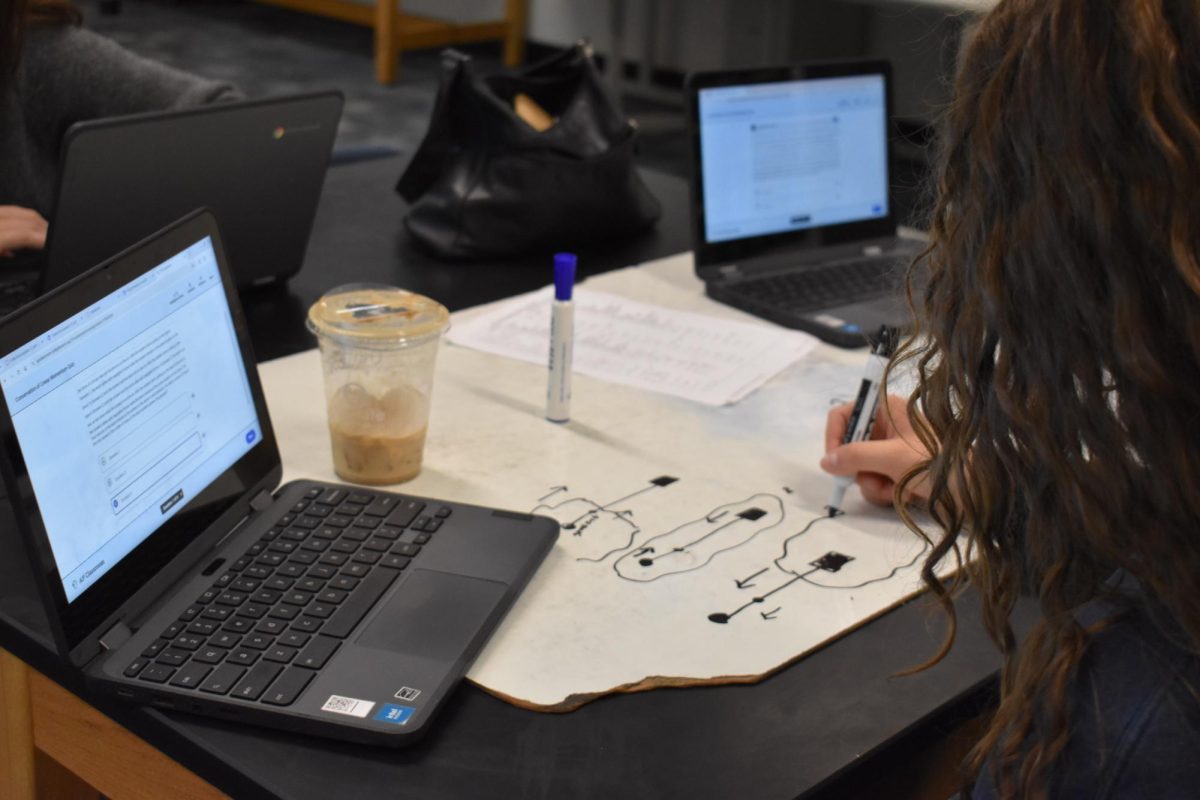
With the AP season dawning on, students begin their hassle with caffeine and late-night study sessions. As much as high school students reap a reward from taking AP tests, there is just as much pressure to cram and take the tests in a highly stressful environment. Therefore, students develop their personal tactics in preparing for these tests.
Students have different starting points for their AP study sessions throughout the year. While many students tend to start early April, others find it beneficial to get a head start earlier in the semester.
“I usually start studying pretty early on. I’m already studying for them, considering they’re coming up pretty soon. Especially for AP Seminar since we’re already starting one of our finals for it,” said Leela Heitsmith, sophomore.
However, the busy schedules of students, especially in the second semester, conflict with their study times, and many students end up cramming for their tests at the last minute.
“I think I started studying beginning of April, really hard for them, since it’s good to really go over everything the month before. I kinda crammed last second, which is my fault too,” said Christopher Morar, sophomore.
Currently, the College Board offers approximately 40 different AP tests, ranging from AP Physics to AP Music Theory. Due to the variety of subjects, students develop different strategies for tackling each one, especially between humanities-based and STEM-based tests.
“Say, my math courses, like chem and physics, are based more on pure practice than on reviewing concepts. I feel like the more you practice, the more it sticks, so repeating the same type of problem, but with different numbers, helps, so then you’re prepared for what might show up on the test. For theoretical or concept-based classes… like APES, it’s more like pure memorization, and you either know it or you don’t. So that one’s like flash cards, and I have someone sit in front of me, and I’m repeating things over to me, and they catch if I say something wrong,” said Tavishi Gupta, junior.
Especially for STEM-related courses, like math and science, repetition is the key to success. AP students usually review problems that were difficult for them and drill them over and over.
“I watch some videos, but most of the time, I’ll go over problems I didn’t understand in class because it’s not worth it to spend more time on stuff you already know. So honestly, I’ll use ChatGPT to generate more questions for me, and if I get it wrong, they’ll explain why,” Morar said.
Before studying, each student has a preferred spot in which they like to study. During these times, it is important to isolate oneself from devices and distractions, so they may make the most out of their time.
“I have a garage/storage unit type thing that I go into study because it’s secluded and it’s away from all my crap, my computers and stuff, so I kinda just bring my Chromebook in there and lock in for a few hours,” said Naitik Mohanty, senior.
Students face immense amounts of pressure juggling multiple AP courses and performing well in them. Throughout periods of stress, it is vital for students to remember to give themselves plenty of breaks and sleep in order to avoid burnout.
“If I ever get stressed during AP season. I just try to compartmentalize. I’m not gonna worry about any of my other AP tests. I’m just gonna focus on English, and then I’ll do that for a day. And the next day, forget about English, I’m only gonna focus on math. So I kinda just take one thing at a time,” said Aiden Young, senior.
Despite this, many students at OHS choose to take AP courses due to the numerous benefits it offers them. When July rolls around, along with the scores, students who used the right tactics will feel an enlightening sense of accomplishment.
“I do want to go out of state for college and I want to go into the medical field, so I just feel like setting myself up right now with these challenging courses that I might face in college as well is just a good starting point and I feel like AP just challenges me in a way that I wouldn’t get out of regular classes. And I get a lot of connections with my teachers as well, and it’s a good environment to be in,” Gupta said.