

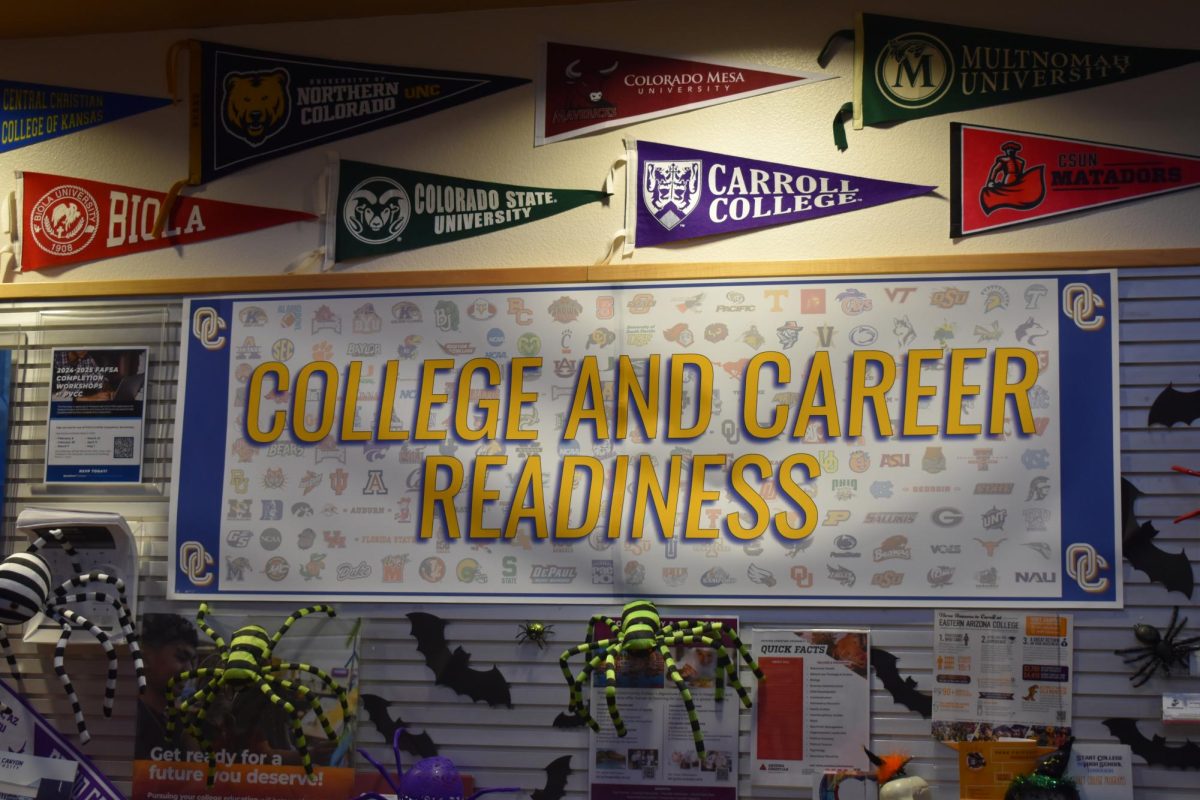
It has circled to that time of the year again. In these first few months of the school year, most seniors, instead of celebrating their last year of mandatory education, must face the daunting process of the college application.
The mere fact that the rest of their lives are balanced on these brittle decisions, not to mention the sheer number of essays these students must write, makes college applications no easy feat. In these intimidating times, however, it is most important to take the process one step at a time, starting from an organized agenda.
“Give yourself a week for each college to write supplements and see if you like the supplements. Because if you’re applying to 10 to 20 colleges, you know there’s not a lot of time to write 3-4 essays for each one,” said Elizabeth Young, senior. “Definitely, make a plan on how much you’re gonna write per week and maybe per day, and stick to that plan as much as you can. We all know that life happens, but 3-4 essays per college is crazy.”
The next step is to choose which colleges to apply to. Amidst the hundreds of universities America has to offer, it is important to narrow down which ones would be one’s best fit. Many factors go into this decision, including the major of interest, location, and opportunities each respective school has to offer.
“A lot of [students] want to go to T20s or Ivys because of the prestige, but it also really depends on the major as well. For me, being a business and law major requires a lot more communication skills and connection skills in order to break into the industry. So T20s and Ivys would fit my interests more,” Young said. “My criteria for schools were obviously a big city, I can’t live in a rural area. I found that out this summer. But other than that, just somewhere where it’s in a safe area, but also has a really interesting campus culture, [has] a lot of campus events, [and] somewhere that prioritizes education, especially with business and has a lot of industry and internship opportunities around it.”
For most students, and especially for those who will pursue a higher degree, going to an in-state school may be a much more affordable and realistic option than going out of state. These in-state schools teach the same skills and are also less stressful, as they can easily be applied through their websites.
“I really wanted to go to NAU. I probably can go to a higher-ranking school, but I have no interest. I already have most of my prerequisites under AP, but I can finish them off there. I liked the environment there [when] I toured it… I’m going into biomed and pre-med eventually, but that’s down the road,” said Greyson Joynt, senior.
Although students may feel the pressure of perfecting their applications and making sure to roll out all the essays in time, it is better to consider the process as the opening of a new chapter. Applying to college is a significant privilege and opportunity in students’ lives.
“Just the fact that I’m applying to Harvard feels insane. I don’t think I’ll get in, just the fact that I’m able to do that, and that’s a thing after seeing it so much before, is crazy. Especially with all the programs I’m applying for, it’s highly competitive and I’m really excited for that,” said Harsha Mahadevan, senior.
No matter how appealing a college is, the financial aspect should definitely not be ignored. Students should thoroughly research the costs of attending the college and consider if this is an affordable option.
“For researching any tuition costs, you’d have to get directly on the university websites and look at their tuition differences between in-state and out-of-state. Each school will vary depending on which state or if it’s a private school versus a state public school,” said Holly Gillaspy, counselor at OHS.
Tuition for universities can go up to a walloping 30 to 90 grand a year, which may make the future look pretty bleak. But on the bright side, there are financial aid resources put in place, such as the FAFSA, and numerous third-party scholarships students can apply for through different platforms.
“Something I discovered recently is that the Common App itself will have a financial aid section, and they start matching you with scholarships based on the info you give to them and to colleges, so that’s a great resource,” Mahadevan said. “Big Future is another one. The AP-based college board basically has their own website called Big Future, and through that, they have a lot of scholarships that you can go look at and see if you qualify for and apply for. Otherwise, there are just big scholarships that people are applying for: Flinn, for example, is one of the huge ones. I just recommend just do a Google search, find out what some local scholarships are, what are some big scholarships, and what are your odds for it.”
Additionally, many organizations and schools prioritize low-income students. From financial aid to application fee waivers, having a low-income status can be extremely beneficial in the application process.
“I didn’t have to pay anything. The only thing I had to pay for was my acceptance fee to NAU, which was like $375. That was a little bit expensive, but I can’t do anything about that. But everything else, no application fees, so it was free applications,” Joynt said.
Considering all of these factors, walking through the application process alone is no easy feat. In addition to parents and college counselors, schools should play a role in assisting ambitious students to strive for more.
“The best way to integrate it is to start small. So maybe having QR codes around campus for students who are interested in college resources to scan and lead them to the website or the app. The second thing would be to use the morning announcements better. So in the beginning, have an announcement per week or maybe twice a week of different college opportunities, like scholarships, for seniors. I think having flyers available at all times in the office would be [a] really good way to advertise that,” Young said.
The component that ties the ribbon of the application is essays. The college application is not only a stepping stone into the future, but these essays can help students truly reflect on who they are as people. By the time students walk across the stage, they will celebrate their own lives and achievements.
“One thing that is important is that I know you hear people say this, but it is really important to be yourself, but be yourself in a more refined manner. You have to truly be yourself, but use bigger vocabulary for real. At the end of the day, college admissions officers do like to see a bit of personality in your essays that really shines through… I think if I’m reading thousands of essays that sound the same, I would get bored too,” Young said.